

THE PROBLEMS OF DISPUTE SETTLEMENT IN COURT IN IN THE FIELD OF OCCUPATIONAL MEDICINE, RELATED TO THE SPECIFICS OF THESE LEGAL RELATIONS
Main Article Content
Abstract
The high prevalence of occupational diseases among workers of the Kemerovo region engaged in production with harmful factors, especially in the coal mining industry, leads to a high number of appeals to Occupational Pathology Centers, and also generates a large number of appeals to judicial authorities in case of refusal due to the disease with the profession. Also in recent years, cases of complaints to judicial authorities on issues of disagreement with the results of the examination of professional suitability have become more frequent. The issues of dispute resolution in connection with obligations arising from harm to the life and health of citizens are within the competence of courts of general jurisdiction.
The study aims to consider the problems of dispute settlement in court in the field of occupational medicine related to the specifics of these legal relations.
Materials and methods. Regulatory legal acts, national guidelines on occupational pathology, textbooks and articles on the subject of the study. Dialectical method of cognition, general scientific, methods of comparison, analysis and synthesis.
Results. In the field of occupational medicine, the vast majority of disputes arise from citizens challenging medical reports issued by medical commissions of Occupational Pathology Centers for the examination of the connection of the disease with the profession. Analyzing the features of the modern judicial method of resolving disputes in the field of occupational pathology, we can come to the conclusion that it seems appropriate to settle the legal framework with the exclusion of conflicting parts, reducing the number of regulatory documents and giving legislative force to the use of such medical documents as clinical recommendations for specific diseases (uniform for the entire territory of the Russian Federation) and the national guidelines on occupational pathology.
Keywords
Author Biographies
Ксения Валерьевна Гаврылышена,
neurologist, regional center for occupational pathologyВиктор Андреевич Семенихин,
doctor of medical sciences, professor, department of faculty therapy, occupational diseases and endocrinologyСергей Николаевич Филимонов,
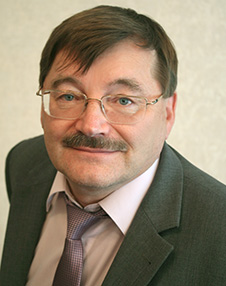
Filimonov Sergey Nikolaevich
M.D., Ph.D., Professor. Chief.
Елена Владимировна Часовских,
occupational pathologist, head of the regional center of occupational pathologyArticle Details
Information about financing and conflict of interests
The authors declare that they have no apparent or potential conflicts of interest related to the publication of this article.
 This work is licensed under a Creative Commons Attribution 4.0 License.
How to Cite
References
The Civil Code of the Russian Federation (part one) of 30.11.1994 (in effect. ed.) No. 51-FZ. Collection of Legislation of the Russian Federation. 1994. No. 32. Article 3301. Russian (Гражданский кодекс Российской Федерации (часть первая) от 30.11.1994 (в действ. ред.) № 51-ФЗ //Собрание законодательства РФ. 1994. № 32. Ст. 3301)
Basova AV. Medical law: a textbook for universities /Basova AV; ed. by Komkova GN. M.: Yurayt, 2023. 310 p. Russian (Басова А.В. Медицинское право: учебник для вузов /Басова А.В.; под ред. Комковой Г.Н. М.: Юрайт, 2023. 310 с.)
Professional pathology: national guidelines /ed. by Izmerov IF. M.: GEOTAR-Media, 2011. 784 p. Russian (Профессиональная патология: национальное руководство /под ред. Измерова И.Ф. М.: ГЭОТАР-Медиа, 2011. 784 с.)
Druzhinina YuF, Trezubov ES. Arbitration process: workshop. Kemerovo, 2018. 142 p. Russian (Дружинина Ю.Ф., Трезубов Е.С. Арбитражный процесс: практикум. Кемерово, 2018. 142 с.)
Order of the Ministry of Health of the Russian Federation No. 36n dated 31.01.2019 «On approval of the Procedure for conducting an examination of the connection of the disease with the profession and the form of a medical conclusion on the presence or absence of an occupational disease». Russian (Приказ Минздрава России от 31.01.2019 № 36н «Об утверждении Порядка проведения экспертизы связи заболевания с профессией и формы медицинского заключения о наличии или об отсутствии профессионального заболевания»)
Resolution of the Government of the Russian Federation of 15.12.2000 (in effect. ed.) No. 967 «On approval of the Regulations on the investigation and accounting of occupational diseases». Collection of Legislation of the Russian Federation. 2000. No. 52. Article 5149. Russian (Постановление Правительства РФ от 15.12.2000 (в действ. ред.) № 967 «Об утверждении Положения о расследовании и учете профессиональных заболеваний» //Собрание законодательства РФ. 2000. № 52. Ст. 5149)