

CLINICAL EFFICIENCY OFSYNBIOTICS IN CAPSULE FORMS IN CORRECTION OF FUNCTIONAL GASTRO-INTESTINAL DISORDERS IN CHILDREN
Main Article Content
Abstract
The article discusses the effectiveness of the use of a new symbiotic Nutrician Additive Supplement (BANS) – "Probioflor Complex", containing 10 strains of bifidobacteria and lactobacilli, vitamin C, lactulose and microcrystalline cellulose (MCC), packed in an enteric capsule.
The research results indicate that «Probioflor Complex» helps to reduce abdominal pain syndrome, manifestations of dyspeptic syndrome, normalize intestinal motor function, reduce subjective clinical syndromes (malaise, weakness, impaired appetite). When using dietary supplements «Probioflor Complex» in 96.0 % of children normalization of the main microscopic indices of the coprogram is observed. The drug helps to restore intestinal microflora: bifidoflora, lactoflora and Escherichia coli; reduction of coccal forms, Escherichia coli with weakly expressed enzymatic properties, lactose-negative enterobacteria.
Keywords
Author Biographies
Алексей Владимирович Молокеев,
doctor of biological sciences, deputy director for scienceКонстантин Сергеевич Казначеев,
candidate of medical sciences, docent, department of pediatrics, faculty of general medicineЛариса Федоровна Казначеева,
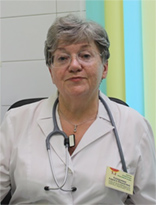
Kaznacheeva Larisa Fjodorovna
MD, PhD, professor, head of the hospital pediatrics department.
She is the main children's allergist of the Novosibirsk region, a member of the Russian Association of Immunology and Allergy, a member of the European Society of Pulmonologists, an expert of the Scientific-Practical Program “Atopic Dermatitis in Children: Diagnosis, Treatment and Prevention”. She is also a member of the Special Commission on Dietetics of the Expert Council of Ministry of Health and Social Development, a member of the Expert Council on Nutrition of the Union of Pediatricians of Russia, a member of the Scientific Council Department of Pediatrics, a member of the Problem Commission “The Protection of the Health of the Mother and Child”, a member of the Board of “Society of Children's Doctors”, a member of the Editorial Board of the “Pediatric Pharmacology” journal, a member of Pediatric Advisory Councils of the Department of Healthcare of Administration of the Novosibirsk region.
Наталья Семеновна Ишкова,
candidate of medical sciences, docent, department of pediatrics and neonatologyАлександр Васильевич Васюнин,
doctor of medical sciences, professor, department of infectious diseases (faculty of pediatrics)Article Details
Information about financing and conflict of interests
The authors declare that they have no apparent or potential conflicts of interest related to the publication of this article.
 This work is licensed under a Creative Commons Attribution 4.0 License.
How to Cite
References
Zakharenko SM. Role of microbiota in human life and the prospects for the preventive use of probiotics. Medical Council. 2017; 15: 61-67. Russian (Захаренко С.М. Роль микробиоты в жизни человека и перспективы профилактического применения пробиотиков //Медицинский совет. 2017. № 15. С. 61-67.) doi: 10.21518/2079-701X-2017-15-61-67
Privorotsky VF, Luppova NE. Clinical approach to the correction of disturbed intestinal microbiocenosis in children. Pediatric gastroenterology of Siberia. 2006; 2(4): 19-23. Russian (Приворотский В.Ф., Луппова Н.Е. Клинический подход к коррекции нарушенного микробиоценоза кишечника у детей //Детская гастроэнтерология Сибири. 2006. Т. 2, № 4. С. 19-23)
Bunova SS, Rybkina LB, Usacheva EV. Laboratory and instrumental methods for diagnosing diseases of the gastrointestinal tract. Omsk, 2014. 57 p. Russian (Бунова С.С., Рыбкина Л.Б., Усачева Е.В. Лабораторные и инструментальные методы диагностики заболеваний желудочно-кишечного тракта. Омск, 2014. 57 с.)
Sitkin SI, Tkachenko EI, Vakhitov TY. Metabolic dysbiosis of the gut microbiota and its biomarkers. Experimental & clinical gastroenterology. 2015; 12(124): 6-29. Russian (Ситкин С.И., Ткаченко Е.И., Вахитов Т.Я. Метаболический дисбиоз и его биомаркеры //Экспериментальная и клиническая гастроэнтерология. 2015. № 12(124). С. 6-29)
Khizhnyak OS. Development of a complex probiotic preparation for therapeutic and prophylactic purposes. Belgorod state university scientific bulletin. Medicine. Pharmacy. 2016; 5(226): 165-169. Russian (Хижняк О.С. Разработка комплексного пробиотического препарата для лечебно-профилактических целей //Научные ведомости Белгородского государственного университета. Серия Медицина. Фармация. 2016. № 5(226). С. 165-169)
Kharitonova LA, Kucheria TV. The multicultural probiotic in children. Experimental and Clinical Gastroenterology. 2016; 1(125): 95-101. Russian (Харитонова Л.А., Кучеря Т.В. Мультиштаммовый пробиотик в педиатрической практике //Экспериментальная и клиническая гастроэнтерология. 2016. № 1(125). С. 95-101)
Zaitseva YuG, Khaleva EG, Zhdanova MV, Novik GA. Non-IgE dependent food allergy in children. Lechaschi Vrach Journal. 2018; 4: 31-33. Russian (Зайцева Ю.Г., Халева Е.Г., Жданова М.В., Новик Г.А. Не-IgE зависимая пищевая аллергия у детей //Лечащий врач. 2018. № 4. С. 31-33)
Bodnya E, Kadelnik L, Bodnya I, Al HA. Helminthiases and giardiasis: optimization of diagnostics and treatment. Paediatrics. Eastern Europe. 2018; 6(2): 322-334. Russian (Бодня Е.И., Кадельник Л.А., Бодня И.П., Аль Х.А. Гельминтозы и лямблиоз: оптимизация диагностики и лечения //Педиатрия. Восточная Европа. 2018. Т. 6, № 2. С. 322-334)
Pechkurov DV, Tyazheva AA. Chronic diarrhea in children: causes, mechanisms, primary diagnostics and management. Current Pediatrics. 2019; 18(6): 416-423. Russian (Печкуров Д.В., Тяжева А.А. Хроническая диарея у детей: основные причины и механизмы, первичная диагностика, подходы к лечению //Вопросы современной педиатрии. 2019. Т. 18, № 6. С. 416-423)
Zakharenko SM, Andreeva IV, Stetsiouk OU. Gastrointestinal adverse drug reactions and antibiotic-associated diarrhea during antibiotic therapy in outpatient practice: prevention and treatment. Clinical Microbiology and Antimicrobial Chemotherapy. 2019; 21(3): 196-206. Russian (Захаренко С.М., Андреева И.В., Стецюк О.У. Нежелательные лекарственные реакции со стороны ЖКТ и антибиотикоассоциированная диарея при применении антибиотиков в амбулаторной практике: профилактика и лечение //Клиническая микробиология и антимикробная химиотерапия. 2019. Т. 21, № 3. С. 196-206)
Belmer SV, Khavkin AI, Pechkurov DV. Functional disorders of the digestive system in children. Principles of diagnosis and treatment (In light of Roman IV criteria). M., 2018. 160 p. Russian (Бельмер С.В., Хавкин А.И., Печкуров Д.В. Функциональные нарушения органов пищеварения у детей. Принципы диагностики и лечения (В свете Римских критериев IV). М, 2018. 160 с.)
Gorbunov SG. Probiotics in rehabilitation of children after acute intestinal infections. Pediatric Nutrition. 2020; 18(5): 30-35. Russian (Горбунов С.Г. Пробиотики как средство реабилитации детей, перенесших острые кишечные инфекции //Вопросы детской диетологии. 2020. Т. 18, № 5. С. 30-35)
Giannelli FR. Antibiotic-associated diarrhea. JAAPA. 2017; 30(10): 46-47
Kanner EV, Gorelov AV, Maksimov ML, Ermolayeva AS, Bulgakova IS. What methods are currently available to prevent and treat antibiotic-associated diarrhoea in children? Medical Council. 2020; 1: 177-184. Russian (Каннер Е.В., Горелов А.В., Максимов М.Л., Ермолаева А.С., Булгакова И.С. Какие способы профилактики и лечения антибиотик-ассоциированной диареи у детей существуют в настоящее время //Медицинский совет. 2020. № 1. С. 177-184)