

BODY WEIGHT DYNAMICS OF PREPARATORY GROUPS’ CHILDREN AT PRESCHOOL EDUCATIONAL INSTITUTIONS IN KEMEROVO
Main Article Content
Abstract
The aim of the research is to study the trends of changes in body weight of six and seven-year-old children attending the preparatory groups at preschool educational institutions.
Materials and methods. The study was carried out with the voluntary informed agreement of the children's official representatives during 2017-2018 on the basis of the Health Center of the Kemerovo City Children’s Clinical Hospital N 1. 603 children attended preschool preparatory groups were under observation. There were 181 six-year-old boys (6 years and 6 months ± 3.33 months), 132 seven-year-old boys (7 years and 2 months ± 1.74 months), 174 six-year-old girls (6 years and 6 months ± 3.13 months), 116 seven-year-old girls (7 years and 2 months ± 1.85 months). All children were examined for anthropometric parameters of physical development using the children's computer program module «Antropo 2009 1.3.0.5». The diet was evaluated by the survey among parents while their children did not attend preschool institutions due to holidays, planned repair works within the institution or quarantine measures.
Conclusion. The study of the physical development of preparatory groups’ children at preschool educational institutions showed that only every third child had harmonious physical development. Body weight in all age and sex groups was characterized by heterogeneity and significant fluctuations in relation to the predicted values.
Children who had physical development below average were overweight (60.0 %), and those with a low physical development level were underweight. All children with above average level and high level of physical development had a tendency to weight deficit (55.56 % and 54.16 %), while overweight percentage was 44.44 % and 45.85 %. To assess physical development in the groups of 6 and 7-year-old boys and 6-year-old girls the method of standard deviation was preferable. With the group of 7-year-old girls it was equally possible to use both methods of centile tables and standard deviation. Feeding children at home contradicted the principles of rationality recommended by the health standards and regulations.
Keywords
Author Biographies
Нина Константиновна Перевощикова,
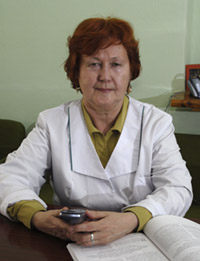
Perevoshchikova Nina Konstantinovna
MD, PhD, professor
She is the Head of the Department of Pediatrics and Propedeutics of Children's Diseases, the Honoured Doctor of the Russian Federation.
All of her work is in close cooperation with practical health care. She gives consultations to more than 800 sick children in various hospitals of the city of Kemerovo and region. She developed new methods of diagnostics and treatment for children with chronic bronchial asthma, which helped to create the City Medical Center for Children and a kind of Asthma-school for children and their parents, that is based on the Children's Clinical Hospital №1.Илья Александрович Селиверстов,
assistant, department of polyclinic pediatrics, propedeutics of childhood diseases and postgraduate trainingСветлана Альбертовна Дракина,
candidate of medical sciences, docent of the department of polyclinic pediatrics, propedeutics of children diseases and postgraduate trainingНаталья Степановна Черных,
candidate of medical sciences, docent, docent of the department of polyclinic pediatrics, propedeutics of childhood diseases and postgraduate trainingArticle Details
Information about financing and conflict of interests
The authors declare that they have no apparent or potential conflicts of interest related to the publication of this article.
 This work is licensed under a Creative Commons Attribution 4.0 License.
How to Cite
References
Rees A, Thomas N, Brophy S, Knox G, Williams R. Cross sectional study of childhood obesity and prevalence of risk factors for cardiovascular disease and diabetes in children aged 11-13. BMC Public Health. 2009; 9(86): 6
Clark LT, El-Atat F. Metabolic syndrome in African Americans: implications for preventing coronary heart disease. Clin. Cardiol. 2007: 30(4): 161-164
Perevoshchikova NK, Seliverstov IA, Drakina SA, Chernykh NS. Physical development of preparatory groups children at preschool educational institutions in Kemerovo. Mother and Baby in Kuzbass. 2020; 3(82): 41-50. Russian (Перевощикова Н.К., Селиверстов И.А., Дракина С.А., Черных Н.С. Физическое развитие детей подготовительных групп дошкольных образовательных учреждений г. Кемерово //Мать и Дитя в Кузбассе. 2020. № 3(82). С. 41-50.) DOI: 10.24411/26867338202010034
Chirkina TM, Aslanov BI, Dushenkova TA, Rischuk SV. Child and adolescent obesity prevalence in St. Petersburg. Preventive and clinical medicine. 2016; 4(61): 11-17. Russian (Чиркина Т.М., Асланов Б.И., Душенкова Т.А., Рищук С.В. Распространенность ожирения среди детей и подростков Санкт-Петербурга //Профилактическая и клиническая медицина. 2016. № 4(61). С. 11-17)
WHO Global Strategy on Diet, Physical Activity and Health (Глобальная стратегия по питанию, физической активности и здоровью ВОЗ). Электронный ресурс: https://www.who.int/dietphysicalactivity/childhood/ru
Zavyalova TP, Starodubtseva IV. Obesity at pre-school age: pedagogical viewpoint to the problem. Uchenye zapiski universiteta imeni P.F. Lesgafta. 2019; 6(172): 68-73. Russian (Завьялова Т.П., Стародубцева И.В. Ожирение в дошкольном возрасте: педагогический взгляд на проблему //Ученые записки университета им. П.Ф. Лесгафта. 2019. № 6 (172)), с.68-73)
Starodubtseva IV, Zavyalova TP. An analysis of the psychophysical development of children aged 6 to 7 with overweight and with obesity. Tomsk State University Journal. 2020; 452: 211-218. Russian (Стародубцева И.В., Завьялова Т.П. Изучение особенностей физической подготовленности и умственного развития детей 6-7 лет с избыточной массой тела и ожирением //Вестник Томского государственного университета. 2020. № 452. С. 211-218)
Universal assessment of the physical development of primary schoolchildren. A guide for medical workers /ed. AA Baranov, VR Kuchma, LM Sukhareva et al. M.: NTsZD RAMS, 2010. 34 p. Russian (Универсальная оценка физического развития младших школьников. Пособие для медицинских работников /под ред. А.А. Баранова, В.Р. Кучма, Л.М. Сухаревой и др. М.: НЦЗД РАМН, 2010. 34 с.)
Pinto RP, Nunes AA, de Mello LM. Analysis of factors associated with excess weight in school children. Rev Paul Pediatr. 2016; 34(4): 460-468. DOI: 10.1016/j.rpp.2016.04.002
Batrakova LV, Nefedov PV, Zacharchenko IS. Physical development of preschool children of rural localityof the krasnodar edge. Kuban Scientific Medical Bulletin. 2017; 24(4): 13-17. Russian (Батракова Л.В., Нефёдов П.В., Захарченко И.С. Физическое развитие дошкольников сельской местности Краснодарского края //Кубанский научный медицинский вестник. 2017. Т. 24, № 4. С. 13-17)
Khodzhieva MV, Skvortsova VA, Borovik TE, Namazova-Baranova LS, Margieva TV, Bushueva TV, et al. Evaluating the physical development of early age schoolchildren (7-10 years): cohort study results. Pediatric Pharmacology. 2016; 13(4): 362-366. Russian (Ходжиева М.В., Скворцова В.А., Боровик Т.Э., Намазова-Баранова Л.С., Маргиева Т.В., Бушуева Т.В. и др. Оценка физического развития детей младшего школьного возраста (7-10 лет): результаты когортного исследования //Педиатрическая фармакология. 2016. Т. 13, № 4. С. 362-366)