

PHYSICAL DEVELOPMENT OF PREPARATORY GROUPS CHILDREN AT PRESCHOOL EDUCATIONAL INSTITUTIONS IN KEMEROVO
Main Article Content
Abstract
The purpose of the research is to study the social status and physical development level of children attending preparatory groups at preschool educational institutions.
Materials and methods. We have observed 603 children attending preparatory groups of preschool educational institutions in Kemerovo, including: 6-year-old boys (n = 181, average age 6 years and 6 months ± 3.33 months), 7-year-old boys (n = 132, 7 years and 2 months ± 1.74 months), 6-year-old girls (n = 174, 6 years and 6 months ± 3.13 months), 7-year-old girls (n = 116, 7 years and 2 months ± 1.85 months). The examination was carried out on the basis of the Health Center of the Kemerovo City Children's Clinical Hospital N 1. The social status of families has been studied. Anthropometric parameters of all children have been studied to assess their physical development. The anthropometry outcome logging and analysis have been carried out with a special module (for children) of computer programs «Antropo 2009 1.3.0.5».
Results. In the research of the physical development of preparatory groups children at preschool educational institutions in Kemerovo, statistical differences have been revealed between the age groups of 6 and 7-year-old boys and girls. There are no sex differences. Physical development at age period of 6-7 years has been defined as heterogeneous, which has required a differentiated approach to its assessment. Height parameters in children from the social group of single-parent families were statistically significantly lower in comparison with children from complete families.
Conclusion. The age of 6 years old children is defined as «critical» in relation to the anthropometric parameter «height». The age of 7 was characterized by the prepubescent growth spurt phenomenon. Physical development assessment of preparatory groups children at preschool educational institutions requires a differentiated approach: to assess the physical development of 6-year-old children the method of centile tables (non-parametric) is recommended to use; to obtain the most accurate results for 7-year-old children the method of standard deviation (SD) (parametric) is recommended.
Keywords
Author Biographies
Нина Константиновна Перевощикова,
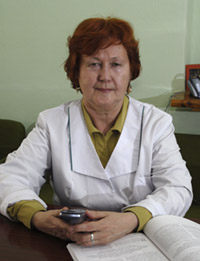
Perevoshchikova Nina Konstantinovna
MD, PhD, professor
She is the Head of the Department of Pediatrics and Propedeutics of Children's Diseases, the Honoured Doctor of the Russian Federation.
All of her work is in close cooperation with practical health care. She gives consultations to more than 800 sick children in various hospitals of the city of Kemerovo and region. She developed new methods of diagnostics and treatment for children with chronic bronchial asthma, which helped to create the City Medical Center for Children and a kind of Asthma-school for children and their parents, that is based on the Children's Clinical Hospital №1.Илья Александрович Селиверстов,
assistant, department of polyclinic pediatrics, propedeutics of childhood diseases and postgraduate trainingСветлана Альбертовна Дракина,
candidate of medical sciences, docent, department of polyclinic pediatrics, propedeutics of childhood diseases and postgraduate trainingНаталья Степановна Черных,
candidate of medical sciences, docent, department of polyclinic pediatrics, propedeutics of childhood diseases and postgraduate trainingArticle Details
Information about financing and conflict of interests
The authors declare that they have no apparent or potential conflicts of interest related to the publication of this article.
 This work is licensed under a Creative Commons Attribution 4.0 License.
How to Cite
References
Physical development of children and adolescents of the Russian Federation. Issue IV /ed. Baranov AA, Kuchma VR. M.: Pediatr, 2013. 192 p. Russian (Физическое развитие детей и подростков Российской Федерации. Выпуск IV /под ред. Баранова А.А., Кучмы В.Р. М.: ПедиатрЪ. 2013. 192 с.)
Tavarish RdS, Kodaneva LN, Kaganer TA. Physical development of children aged 6-9 years old living in different regions of the world. Uchenye zapiski universiteta imeni P.F. Lesgafta. 2018; 3(157): 264-268. Russian (Тавариш Р.С., Коданева Л.Н., Каганер Т.А. Физическое развитие детей 6-9 лет, проживающих в разных регионах мира //Ученые записки университета имени П.Ф. Лесгафта. 2018. № 3(157). С. 264-268)
Gelashvili OA, Khisamov RR, Shalneva IR. Physical development of children and adolescents. Modern problems of science and education. 2018; 3: 50. Russian (Гелашвили О.А., Хисамов Р.Р., Шальнева И.Р. Физическое развитие детей и подростков //Современные проблемы науки и образования. 2018. № 3. С. 50)
Agirov AK, Alchinov IB, Andurkhaev KM, et at. Fizicheskoe razvitie detey i podrostkov Rossiyskoy Federatsii: uchebnoe posobie. V. VII. M., 2019. Russian (Агиров А.Х., Алчинов И.Б., Андурхаев Х.М., и др. Физическое развитие детей и подростков Российской Федерации: учебное пособие. – Т. VII. – М., 2019)
Perevоshchikova NK, Anisimova AV, Torochkina GP, Koskina EV, Chernych NS. Dynamics of physical development of schoolchildren Kemerovo for 50 years (the period 1962-2012). Mother and Baby in Kuzbass. 2014; 1: 4-8. Russian (Перевощикова Н.К., Анисимова А.В., Торочкина Г.П., Коськина Е.В., Черных Н.С. Динамика физического развития школьников г. Кемерово за 50 лет (период 1962-2012 гг.) //Мать и Дитя в Кузбассе. 2014. № 1. С. 4-8)
Tapeshkina NV, Koskina EV, Pochueva LP, Perevoshchikova NK. Physical development of children and adolescents in Kuzbass: monograph. 2017. P. 12-21. Russian (Тапешкина Н.В., Коськина Е.В., Почуева Л.П., Перевощикова Н.К. Физическое развитие детей и подростков Кузбасса: монография. 2017. С. 12-21)
Salchak NYu, Marchenko VV. Methodological approaches to assessing the physical development of children. Russian Bulletin of perinatology and pediatrics. 2018; 63(4): 187. Russian (Салчак Н.Ю., Марченко В.В. Методологические подходы к оценке физического развития детей //Российский вестник перинатологии и педиатрии. 2018. Т. 63, № 4. С. 187)
Gritsinskaya VL, Novikova VP. Physical development of children in St. Petersburg: to the discussion about methods of evaluation. Pediatr (Sankt-Peterburg). 2019; 2: 33-36. Russian (Грицинская В.Л., Новикова В.П. Физическое развитие детей Санкт-Петербурга: к дискуссии о методах оценки //Педиатр. 2019. №2. С. 33-36)
Barshai VM, Krivsun SN. Physical education of preschoolers as the basis of the health of modern society. Tavrichesky scientific observer. 2016; 11-3(16): 6-8. Russian (Баршай В.М., Кривсун С.Н. Физическое воспитание дошкольников как основа здоровья современного общества //Таврический научный обозреватель. 2016. № 11-3(16). С. 6-8)
Physical activity of children [Electronic resource]. Russian (Физическая активность детей [Электронный ресурс]) https://www.who.int/ru/news-room/fact-sheets/detail/physical-activity (дата обращения: 03.07.2020)